Standard pallet movement and raised working-height applications are different material-handling requirements. Confusing the two can lead businesses to purchase equipment that technically moves a pallet but does not properly solve the operational problem.
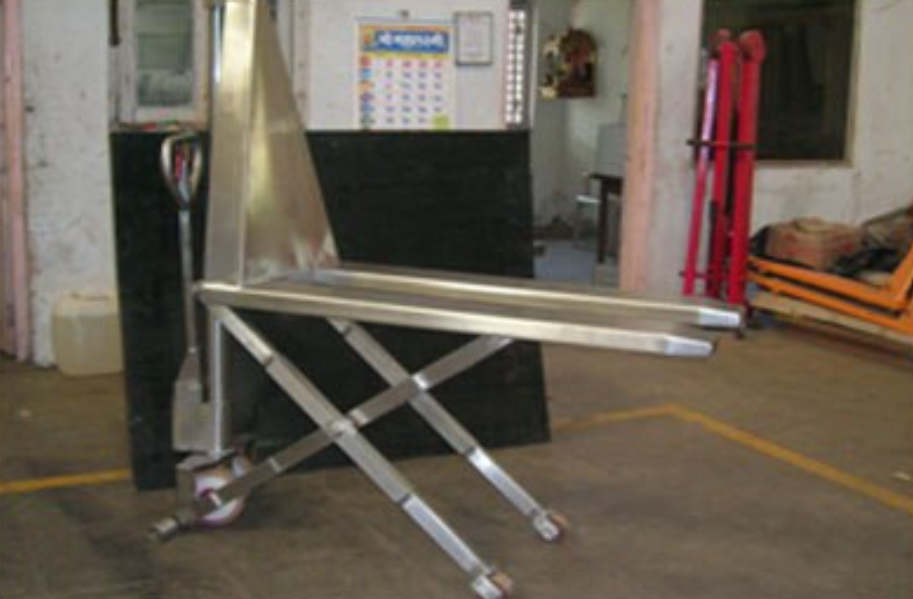
High Lift Pallet Trucks are designed for applications where suitable palletized loads need to be raised beyond the minimal floor clearance normally required for horizontal transportation.
For buyers in Mumbai, comparing the actual work performed by high-lift and conventional pallet trucks is an important step before procurement.
The Main Difference Is the Required Lift
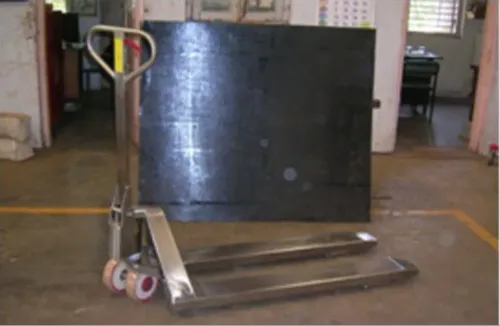
A standard hydraulic pallet truck generally raises a pallet enough to clear the floor and enable horizontal movement.
A high-lift model provides additional lifting height, making it useful for selected applications where the load needs to reach a more convenient working level.
This can be relevant in tasks involving positioning, handling, or work processes where repeatedly bending towards floor-level loads would otherwise be necessary.
However, high lift does not mean the equipment automatically replaces a stacker. Stackers are intended for a different range of vertical material-handling tasks.
When a Standard Pallet Truck May Be Enough
If the requirement is mainly to move palletized goods from one warehouse point to another, a conventional pallet truck may be the simpler option.
It can suit operations involving receiving, internal transport, picking support, staging, and dispatch where significant vertical lifting is not required.
Adding lifting functionality that employees do not actually use may increase complexity without solving an operational need.
When High Lift Becomes Valuable
Consider High Lift Pallet Trucks when raising a suitable load to a more accessible height is genuinely part of the process.
For example, an operation may need goods positioned at an appropriate level during packing, transfer, handling, or production-support activities.
Before choosing one, examine:
- Required load capacity
- Desired lifting height
- Pallet compatibility
- Load dimensions and stability
- Available working space
- Frequency of lifting
- Floor conditions
- Intended work process
The load and pallet must be suitable for the selected equipment configuration.
Do Not Select on Lift Height Alone
A higher maximum lift specification is not automatically better. Equipment needs to remain appropriate for the load and environment throughout the intended operating range.
Mumbai facilities can face additional constraints such as limited aisle space, busy production floors, and restricted material staging areas. Equipment dimensions and manoeuvrability therefore deserve close attention.
Robotic Equipments works with businesses in Mumbai and Maharashtra evaluating material-handling solutions for different operating requirements.
The practical choice between a conventional truck and a high-lift version depends on what happens after the forks enter the pallet. If the task is primarily horizontal transportation, conventional equipment may be sufficient. If controlled elevation of suitable loads is an essential part of the workflow, High Lift Pallet Trucks can provide functionality better aligned with the job.