Hydraulic systems depend on more than pumps and cylinders. A complete setup also requires the right supporting components to control flow, connect different sections, maintain pressure, prevent leakage, and keep equipment operating consistently. These supporting components are commonly grouped under Hydraulic Accessories.
For factories, warehouses, engineering units, maintenance teams, and industrial operations in Mumbai, selecting suitable hydraulic accessories can directly affect equipment reliability, maintenance frequency, and overall system performance.
What Are Hydraulic Accessories
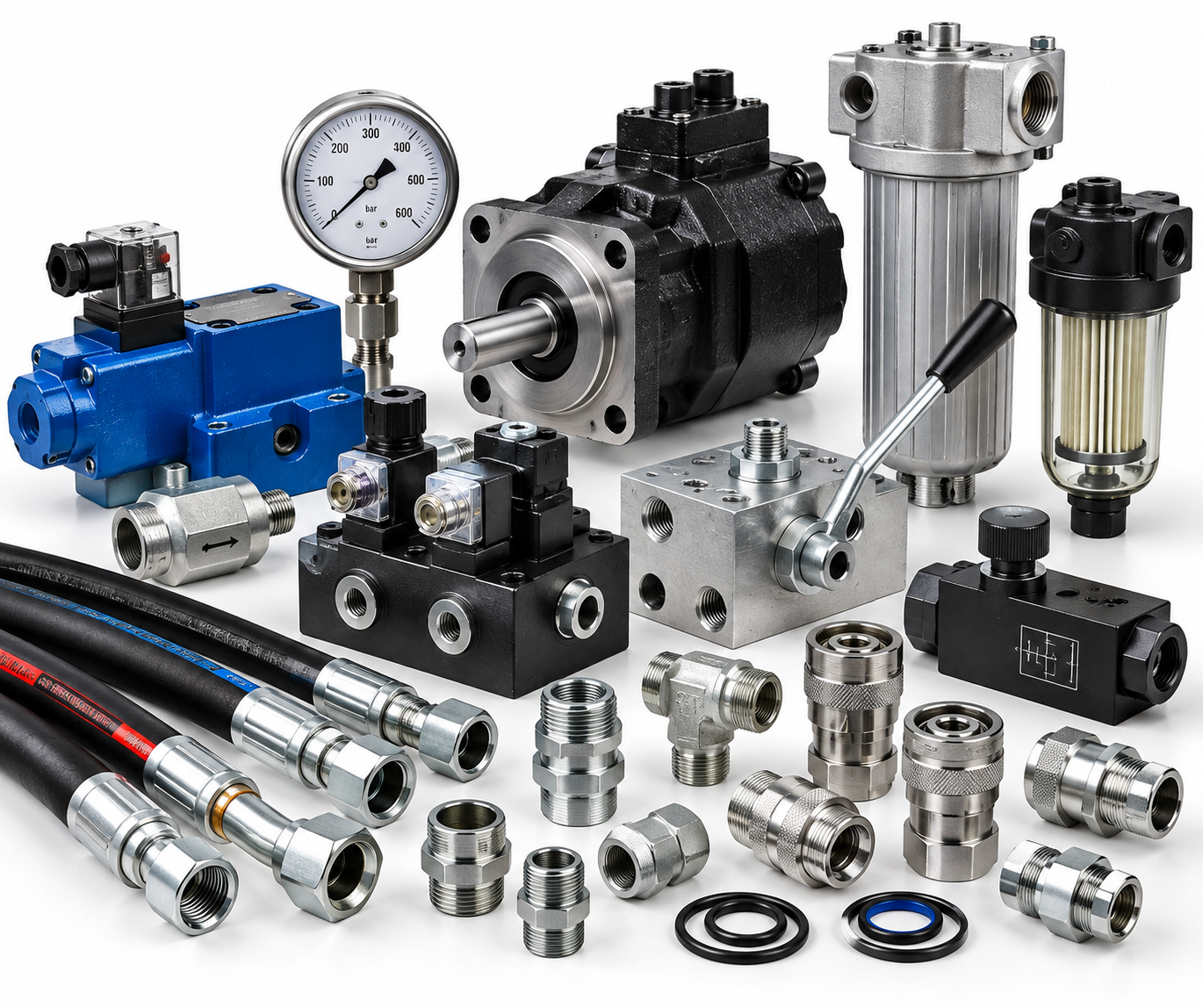
Hydraulic accessories include a broad range of components used to connect, control, protect, monitor, or support a hydraulic system.
Depending on the application, these may include:
- Hydraulic hoses
- Fittings and connectors
- Couplings
- Pressure gauges
- Filters
- Seals
- Adaptors
- Clamps
- Valves and supporting components
- Reservoir-related accessories
Each part performs a specific role, and even a small mismatch can affect how efficiently the system functions.
Why Compatibility Matters
One of the most common purchasing mistakes is selecting accessories only by appearance or approximate size.
Hydraulic systems operate under pressure, which means thread type, pressure rating, hose specification, connection method, material compatibility, and operating temperature must all be considered.
A fitting that physically connects but does not match the required pressure or thread standard can create leakage, premature wear, or system failure.
Businesses should therefore verify equipment specifications before replacing or adding components.
Consider the Working Pressure
Every hydraulic component has a designed pressure range.
Accessories used in high-pressure industrial equipment should be selected according to the system's actual operating and maximum pressure conditions. Using components below the required rating can reduce system reliability.
Pressure spikes and demanding duty cycles should also be considered where relevant.
Match Accessories to the Environment
Industrial conditions vary widely across facilities in Mumbai and Maharashtra.
Hydraulic components may be exposed to dust, moisture, heat, vibration, chemicals, outdoor conditions, or continuous operation. These factors can influence the choice of hose materials, seals, fittings, and protective components.
Maintenance accessibility should also be considered, particularly when accessories are installed inside compact machinery.
Check Before Ordering Replacement Parts
Before sourcing replacement Hydraulic Accessories, note the existing component specifications carefully.
Useful details include:
- Equipment model
- Thread type and size
- Pressure rating
- Hose dimensions
- Port configuration
- Fluid type
- Operating temperature
- Connection method
- Application and duty cycle
Photographs can support identification, but technical dimensions and specifications should still be confirmed wherever possible.
Robotic Equipments supports industrial customers in Mumbai with material-handling and hydraulic equipment requirements. Choosing hydraulic accessories according to pressure, compatibility, operating conditions, and system design helps maintain reliable performance and reduces unnecessary maintenance interruptions.
For businesses across Mumbai and Maharashtra, treating accessories as engineered components rather than minor replacements can make a meaningful difference to the long-term operation of hydraulic machinery.