Moving goods efficiently inside a warehouse or manufacturing facility is essential for maintaining productivity. While forklifts and pallet trucks handle heavy palletized loads, many day-to-day tasks involve transporting cartons, tools, components, and finished products that require a more flexible solution. A platform trolley provides a practical and cost-effective way to move materials safely and efficiently.
Businesses across Mumbai use platform trolleys in factories, warehouses, hospitals, retail stores, engineering workshops, and educational institutions because of their versatility and ease of operation.
What Is a Platform Trolley?
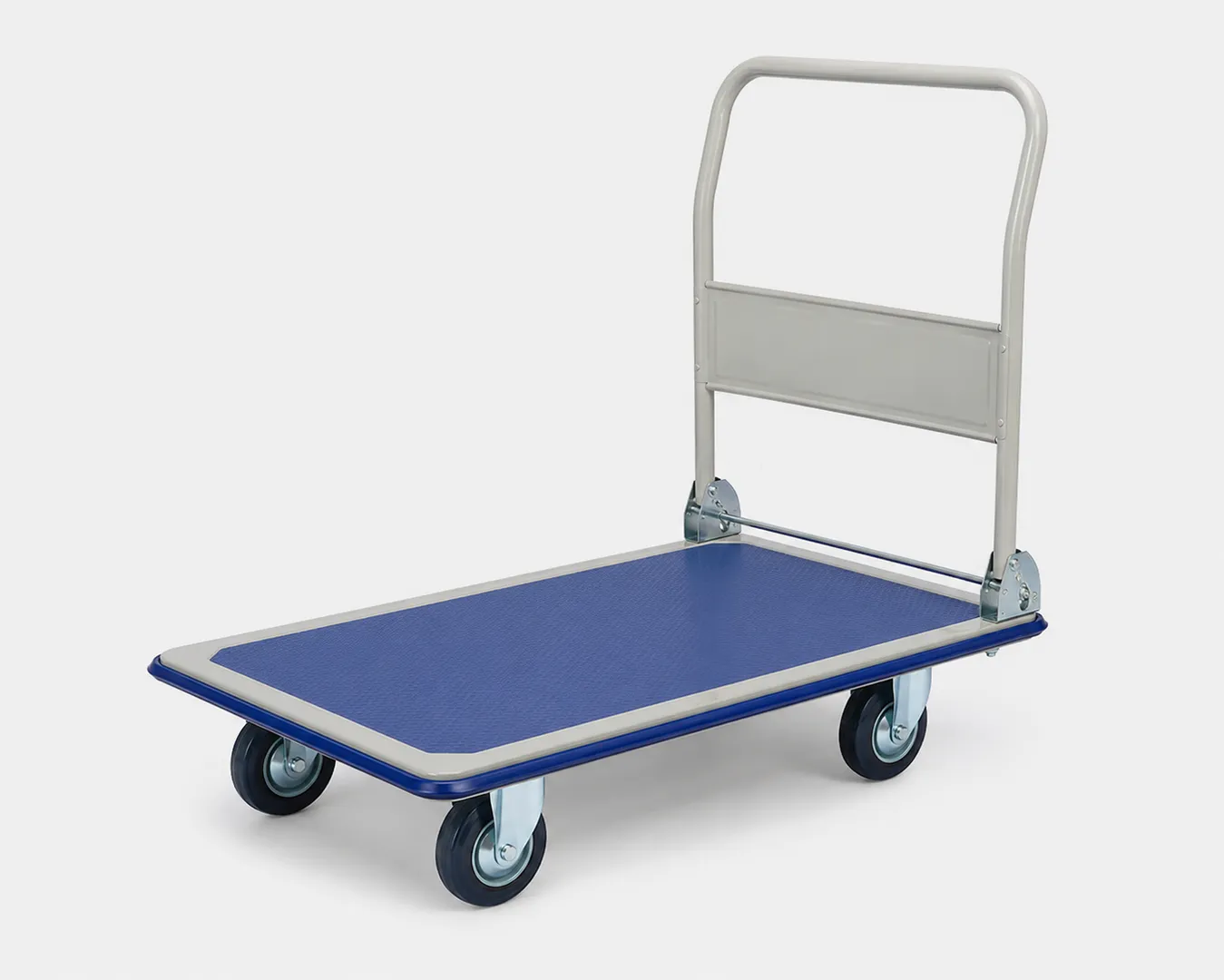
A platform trolley is a manually operated transport cart with a flat platform mounted on wheels. It is designed to carry goods safely over short distances while reducing manual lifting.
Available in various sizes and weight capacities, platform trolleys can be customized for different industrial applications.
Common designs include:
- Foldable platform trolleys
- Heavy-duty industrial trolleys
- Mesh platform trolleys
- Stainless steel platform trolleys
- Multi-tier platform trolleys
Each design serves different operational needs depending on the type of material being transported.
Advantages of Platform Trolleys
Platform trolleys remain popular because they offer several practical benefits.
These include:
- Easy movement of goods
- Reduced manual handling
- Improved workplace safety
- Better productivity
- Simple operation
- Low maintenance
- Suitable for various industries
- Cost-effective material transportation
They are particularly useful where frequent movement of medium-weight items is required.
Applications Across Different Industries
Platform trolleys are used in a wide range of industries, including:
- Manufacturing plants
- Warehouses
- Retail stores
- Hospitals
- Pharmaceutical companies
- Automobile workshops
- Packaging industries
- Educational institutions
Their adaptability makes them one of the most commonly used manual material handling tools.
Factors to Consider Before Buying
Choosing the correct platform trolley requires evaluating operational requirements.
Important considerations include:
- Load capacity
- Platform size
- Wheel type
- Handle design
- Material of construction
- Floor conditions
- Frequency of use
Selecting the right specifications improves operator comfort and extends equipment life.
Wheel Selection Matters
The performance of a platform trolley depends significantly on its wheels.
Different wheel materials are suitable for different environments:
- Rubber wheels for quieter operation
- Polyurethane wheels for smooth industrial floors
- Nylon wheels for heavy-duty applications
- Cast iron wheels for rugged environments
Matching wheel material to floor conditions improves maneuverability and reduces wear.
Maintenance Tips
Platform trolleys require minimal maintenance when inspected regularly.
Routine maintenance includes:
- Checking wheel condition
- Tightening bolts
- Lubricating wheel bearings
- Inspecting platform structure
- Cleaning after use
- Replacing worn components when necessary
Simple maintenance practices help ensure dependable daily operation.
Improving Workplace Efficiency
Efficient movement of materials contributes directly to warehouse productivity. Platform trolleys reduce unnecessary physical effort, minimize handling time, and improve workflow across different departments.
Businesses throughout Mumbai continue to rely on practical material handling equipment that supports smooth daily operations. Robotic Equipments manufactures platform trolleys designed for industrial environments, helping organizations transport goods safely while improving operational efficiency and workplace productivity.
Keywords