A floor crane that drifts, lifts slowly, lowers in jerks or refuses to move cannot be diagnosed by replacing its hydraulic valve at random. By tracing the pump, valves, cylinder, load path and operating conditions in sequence, you can identify the likely fault, inspect the crane safely and specify a repair or replacement that preserves load control.
Key takeaways
- A relief valve protects the circuit but cannot hold a suspended load.
- Check oil level, leaks, hoses, valve operation, and mechanical restraints in sequence.
- Match slow lifting, drift, noise, and overheating to specific fault sources.
- Demand load-test results, pressure readings, and a written repair record.
How the hydraulic valve circuit controls a floor crane
The pump draws oil from the tank and sends it through the pressure line. A relief valve diverts excess pressure back to tank, protecting the circuit; it cannot secure a suspended load.
The directional valve routes oil to actuator port A or B, while the lowering valve meters return flow so the boom descends at a controlled speed. The cylinder converts oil pressure into boom movement.
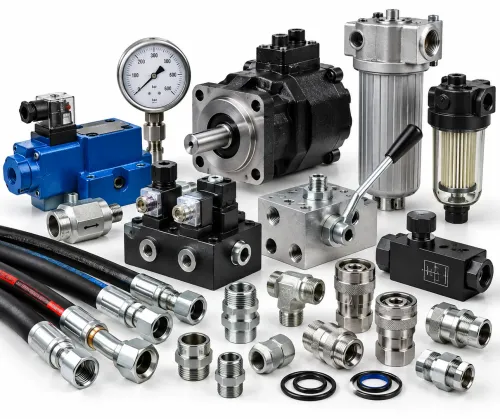
On the machine, find the pump beside the motor, the cylinder along the boom, and valve bodies where hoses branch. A valve body has threaded ports, hose connections, a spool with a hand lever or linkage, an adjustment screw, or a replaceable relief cartridge.
A load-holding or pilot-operated check valve sits close to the cylinder and blocks reverse flow after a hose failure.
| Relief valve | Limits system pressure | Protects components; does not stop load descent |
|---|---|---|
| Over-centre or pilot-operated load-holding valve | Restricts actuator flow and locks the load until pilot pressure opens it | Prevents uncontrolled lowering |
On a schematic, P means pump, T tank, and A and B the actuator lines. For floor cranes hydraulic valves for load handling problems in Mumbai, inspect the whole configuration: extension, working radius, boom angle and floor condition change capacity. The maximum frame rating is not universal.
A hydraulic valves for floor crane circuit cannot make an overloaded or unstable crane safe.
Match each crane symptom to the hydraulic or mechanical cause
Use the symptom, pressure reading and load-path inspection together; no single fault proves a bad hydraulic valve.
1. Load drift in neutral can come from spool leakage, a leaking pilot-operated check valve, cylinder-piston seal bypass, trapped air or thermal expansion. Isolate the cylinder, then monitor position and pressure with a calibrated gauge before condemning the valve.
2. Slow lifting points to a worn pump, low oil, a blocked filter, relief-valve bypass, excessive load or cylinder leakage. If pressure reaches relief setting without movement, check the load and mechanical binding before replacing the valve.
3. Jerky lowering indicates a blocked or misadjusted flow-control orifice, contaminated spool or pilot passage, air in the cylinder, or oil outside the valve maker’s viscosity range. Increasing relief pressure will not repair this fault and can damage the structure.
4. Failure to lower suggests a jammed directional or lowering valve, blocked pilot passage, seized linkage or a load-holding valve installed in the wrong orientation. Do not force the control.
5. Inability to hold pressure points to internal valve leakage, cylinder-seal bypass, a leaking hose or overloaded configuration. Compare pressure decay with the cylinder isolated.
6. Hydraulic noise indicates low oil, aeration, a blocked filter or pump wear. Oil leakage requires inspection of hoses, fittings, rod seals and valve-body seals.
7. Uneven lifting requires checks for trapped air, unequal cylinders, restricted flow, bent components or an off-centre load.
Inspect worn boom pivots, elongated pin holes, cracked welds, bent extensions, damaged hooks, stretched or kinked chains, failed caster brakes and loose fasteners. These industrial floor crane problems can make a sound hydraulic circuit unsafe.
Use a safe inspection sequence when the crane will not lift
1. Stop work immediately, keep everyone outside the fall zone, apply the caster brakes where the crane design requires them, lower the load onto stable support, and secure the boom against unintended movement.
2. Shut down the power source, isolate electrical or engine energy, and block or mechanically support every raised part. Relieve stored hydraulic pressure through the manufacturer’s procedure; never loosen a pressurised hose.
3. Confirm the rated load for the actual boom extension, working radius and angle. Check that the floor is level and sound, then rule out side loading, dragging and an off-centre pick.
4. Inspect the oil level, visible leaks, hose damage, return or pressure filter, valve position, control linkage and electrical solenoid connections. During floor crane maintenance in Mumbai, use clean connections and filtered oil because contaminated fluid can make a valve stick again.
5. Fit a calibrated gauge and run a controlled, unloaded test. Watch pressure and cylinder movement, and never search for a pinhole leak with your hand.
6. If pressure reaches the specified relief setting but the crane still will not lift, investigate pump wear, a blocked filter, low oil, an overloaded configuration or cylinder damage. A relief valve set too low causes apparent under-capacity; setting it higher can overload the boom, pins, frame or cylinder.
If pressure never builds, inspect the pump and suction supply before condemning the valve.
Specify the right replacement valve and prevent repeat failures
Specify hydraulic valves for floor crane service from the circuit, not the hole in the mounting plate. Require the circuit diagram or port functions, working-pressure and maximum-flow ratings, actuator bore and stroke, oil type and viscosity range, ambient temperature, required lowering speed and fail-safe behaviour.
Measure port size and thread type, confirm mounting, and record whether control uses a hand lever, mechanical linkage, solenoid or pilot signal.
Check relief-cartridge settings, flow-control orientation, seal materials and hydraulic-fluid compatibility. A valve with the right thread but the wrong flow rating can cause slow movement, heat, instability or poor load control. Never bypass a load-holding valve or replace it with a relief valve; the wrong orientation can permit free fall.
For hoses, match working and burst pressure, temperature, bend radius, abrasion protection, fitting type and movement through the full boom travel. During floor crane maintenance in Mumbai, inspect monsoon water ingress, coastal salt, outdoor corrosion and contamination. Use clean connections, filtered oil and a clean breather.
Compare the replacement against these decision points:
| Circuit fit | Confirm P, T, A and B functions, mounting and control signal | Prevents a physically fitting valve from routing oil incorrectly |
|---|---|---|
| Load control | Verify cartridge setting, flow direction and fail-safe action | Prevents drift or uncontrolled descent |
| Hose service | Match pressure, temperature, bend radius, fittings and travel | Prevents rubbing, twisting and premature rupture |
Judge floor crane repair in Mumbai by the test record
A competent quotation for floor crane repair in Mumbai separates investigation from parts and testing. Require these line items:
- Diagnosis and fault isolation
- Valve testing and relief-pressure measurement
- Hydraulic flushing with filtered replacement oil
- Filter or hose replacement
- Cylinder resealing
- Structural repair, including pins, welds and frame members
- Post-repair function and load testing
During floor crane maintenance in Mumbai, insist on clean hose connections, a clean breather and the manufacturer’s specified oil cleanliness level. A new valve cannot hide contamination or a damaged cylinder.
The release report must record the crane’s rated configuration, measured relief pressure, drift or leakage result, hose and structural findings, test load, test duration, remaining defects and the person who released it.
| Test type | What it proves | What it cannot prove |
|---|---|---|
| No-load function test | Controls move, lower and stop correctly | Load-holding performance |
| Controlled proof or rated-load test | The repaired crane holds and operates under its defined load | Performance outside the stated configuration |
After work on a valve, cylinder, hose, boom pin, weld or structural member, test every motion under controlled conditions, then complete the manufacturer-, design- and locally defined proof test. Robotic Equipments is worth comparing when you need Mumbai lifting expertise, but judge providers by measurements and records, not a claimed valve brand.
Related product
 | Floor Crane Floor Crane is a versatile and mobile lifting equipment designed to lift, move, and position heavy loads within industrial, workshop, and warehouse... View product → |
Frequently asked questions
How does a hydraulic valve circuit control a floor crane?
The pump sends oil through the pressure line; directional and flow-control valves govern actuator movement, while the relief valve returns excess pressure to the tank. The relief valve protects the circuit but does not secure a suspended load.
What causes common industrial floor crane problems?
Slow lifting can result from low oil, pump wear, restrictions, or incorrect valve settings. Load drift points to internal valve or cylinder leakage, while noise and overheating indicate problems such as aeration, contamination, excessive pressure, or blocked cooling.
What should you inspect when a floor crane will not lift?
Keep people clear, lower or secure the load, isolate energy where possible, then check oil level, visible leaks, hose condition, controls, valve operation, pressure readings, and mechanical obstructions. Do not work beneath an unsupported suspended load.
How do you specify a replacement hydraulic valve for a floor crane?
Match the valve's function, port size, flow rating, pressure rating, voltage or actuation method, mounting pattern, seal material, and fluid compatibility with the crane circuit. Confirm these details against the schematic and existing valve plate.
How should you judge floor crane repair in Mumbai?
Ask for a written record showing the fault found, parts replaced, relief-pressure setting, leak checks, unloaded and loaded movement tests, and the final rated-load test result.
Keywords