When warehouse lifting requirements increase, businesses often reach a point where purely manual equipment starts to affect productivity, but a fully electric machine may not yet be necessary for every task.
That is where Semi Electric Stackers can become an option worth evaluating.
For manufacturing units, warehouses, distribution centres, and stock-handling operations in Mumbai, the right decision depends on workload, lift frequency, travel requirements, space, and budget rather than simply choosing the most automated machine available.
Understand What Semi Electric Means
Equipment configurations can vary, so buyers should always verify the exact functions of the model under consideration.
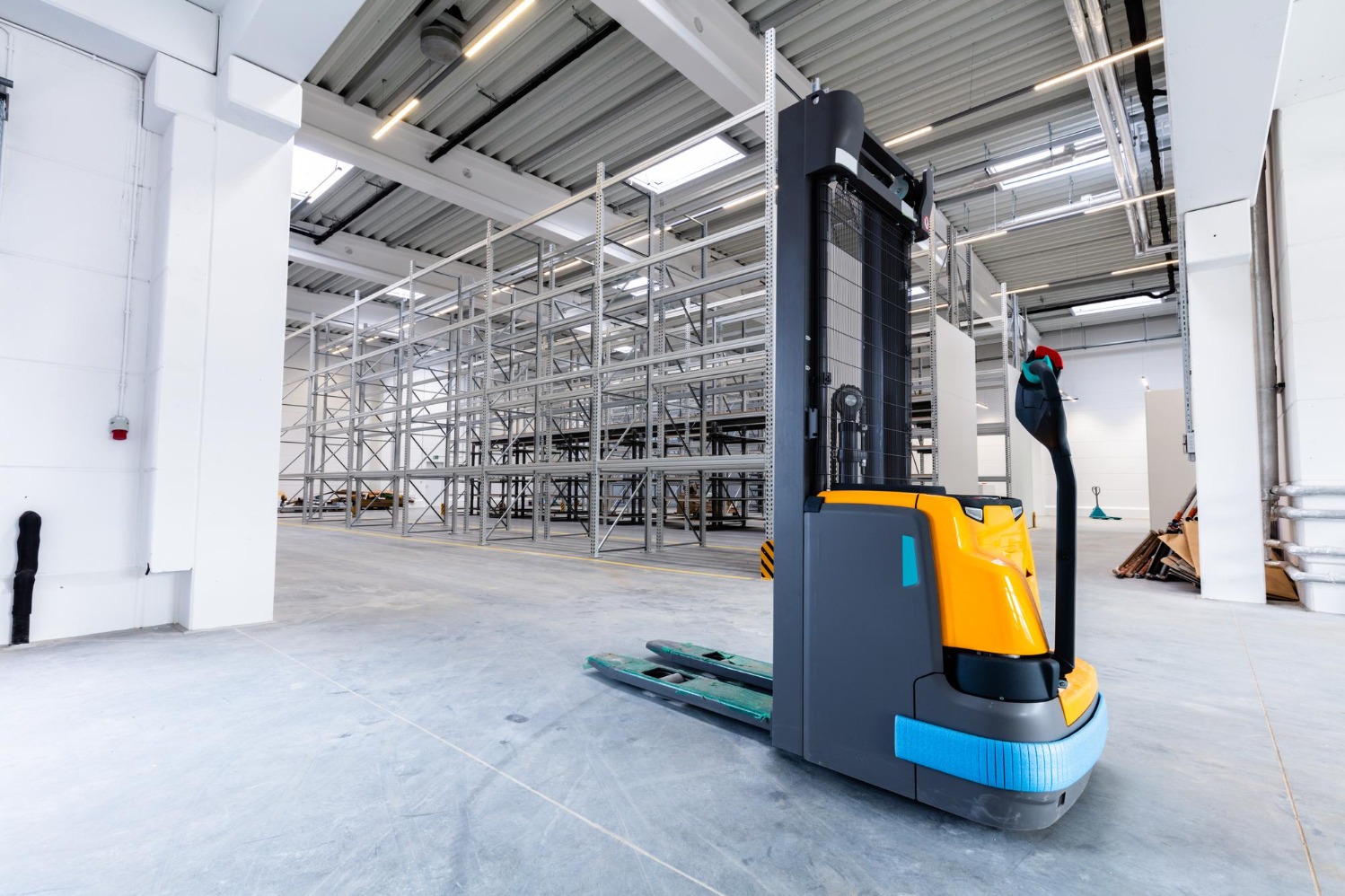
In a typical semi-electric stacking concept, powered assistance is provided for a key function such as lifting, while another function such as travel may remain manually controlled.
This can reduce some of the effort associated with repeated lifting while maintaining a comparatively straightforward operating arrangement.
Compare It With Manual Equipment
Manual hydraulic stackers can work effectively where lifting cycles are relatively limited and loads remain within appropriate capacities.
They may be suitable for smaller operations where the equipment is used occasionally rather than continuously.
As the number of daily lifting cycles rises, manually raising loads can consume more time and physical effort. Semi-electric operation can then become more attractive because powered lifting can support repetitive handling.
Consider upgrading when:
- Lifting cycles have increased
- Employees frequently reposition palletized loads
- Manual lifting takes too much operational time
- Loads regularly need elevation
- Warehouse throughput is growing
The decision should still account for the complete workflow.
Why Fully Electric Is Not Automatically Necessary
Fully electric stackers can provide powered lifting and travel, depending on the equipment design. They are particularly relevant where handling frequency and movement requirements justify greater automation.
But paying for additional powered functionality makes sense only when the operation will use it.
A facility with short travel distances and moderate lifting requirements may find Semi Electric Stackers better aligned with its working pattern.
Evaluate Battery and Operating Requirements
Once powered equipment is introduced, charging arrangements, battery management, maintenance, and operating practices need consideration.
Businesses should identify an appropriate charging location and understand the equipment's expected working cycle.
Available aisle space, pallet design, load centre, required lifting height, floor condition, and operator practices should remain part of the assessment.
Robotic Equipments assists industrial customers in Mumbai, Maharashtra with material-handling equipment selection based on actual operating needs.
A useful way to decide is to count lifting and travel cycles during a typical shift. If manual lifting has become a recurring productivity constraint but powered travel offers limited additional value, Semi Electric Stackers may provide a practical middle ground between manual and fully powered material handling.
Keywords